2026-10-19 · By Annanya Adyasha
How Health Ecommerce Brands Get Recommended by ChatGPT
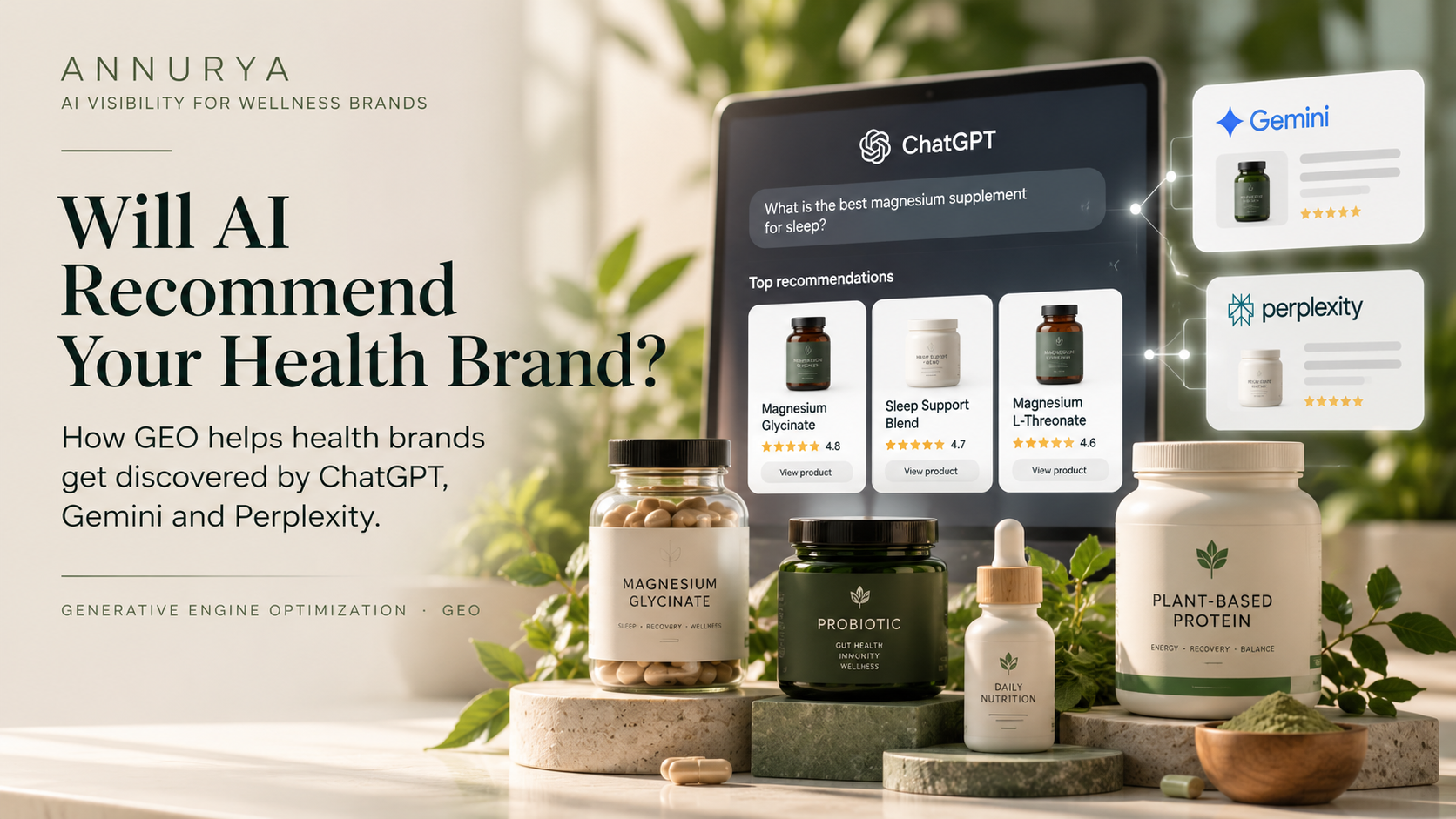
The new product recommendation engine
A health-conscious shopper no longer starts a product search on Google or Amazon. They open ChatGPT and ask, "What is the best magnesium supplement for sleep?" or "Which probiotic is backed by clinical research?" This shift is becoming the norm: 32% of US adults used an AI chatbot for health information in 2025, and over 230 million people ask ChatGPT health-related questions every week.
AI systems like ChatGPT, Perplexity, and Gemini have become default product research tools. They synthesize information from across the web and deliver a short list of specific product recommendations, complete with explanations. If your product is not on that list, the sale is lost before the shopper ever reaches your site. The recommendation itself is the new shop window.
This is where Generative Engine Optimization (GEO) enters the picture. GEO is the practice of structuring your product data, content, and authority signals so AI systems can find, interpret, and cite your brand in their answers. For health ecommerce brands, where trust and credibility are the primary purchase drivers, GEO is now an essential revenue channel, not an experimental tactic. Annurya helps health-focused brands build the structured signals and authoritative content that AI platforms rely on to make safe, trustworthy recommendations.
ChatGPT Just Added Shopping - How to Make AI Recommend ...
Why health brands must appear in AI answers
 For health brands, the search journey has been redefined. Today, 38% of shopping prompts on ChatGPT are for interest âÃÂàphase-one exploration âÃÂàand 24% are for consideration. The purchase path for health products already involves an average of 4 to 7 touchpoints. Missing the AI touchpoint means losing the consideration battle before the shopper ever reaches a product page.
The commercial upside is significant. Adobe Analytics found that AI-referred traffic converts 54% better than non-AI traffic across retail. For health and supplement stores, an aggregated study of 329 US and EU brands reported a 4.68% conversion rate from large language model (LLM)-referred visitors, versus a 2.47% cross-vertical average. This premium holds across the funnel: AI-engaged shoppers had a 49.3% cart-to-checkout completion rate compared to 26.3% for non-engaged shoppers.
Health and wellness is also the largest subscription category on Recharge, with 11.23 million active subscribers âÃÂàsupplements alone account for 7.6 million. By optimizing for AI visibility through structured data, credible reviews, and answer-first content, health brands position themselves to be cited in high-intent conversational queries. Annurya's approach of building verifiable authority signals âÃÂàfrom E-E-A-T content to entity recognition âÃÂàdirectly addresses this: practitioners and brands that structure their expertise for AI discovery earn citation in the answers that shape today's health purchase decisions.
How ChatGPT picks products to recommend
 ChatGPT does not use paid placement. Its shopping recommendations are built from three aligned inputs: merchant product feeds (increasingly via the Agentic Commerce Protocol, or ACP), the product pages themselves, and the brand's broader footprint of reviews, editorial citations, and expert mentions. These three layers must reinforce each other.
ChatGPT typically names only two to five products in a single response, creating a winner-take-most dynamic where missing the list means losing the sale before the shopper even clicks a link. The most weighted signals are product schema markup and aggregate reviews (both rated very high), followed closely by editorial buying guides and comparison content (also very high), with marketplace ratings playing a medium-high role.
ChatGPT cross-checks feed data against the website's actual product page to confirm accuracy, image match, and whether the page clearly explains who the product is for and why it works. Inconsistencies between a feed and a product page reduce trust and lower the chance of recommendation.
Product schema is the non-negotiable foundation
 When an AI platform evaluates a product, it does not "read" a page the way a human does âÃÂàit parses structured markup. Product schema tells ChatGPT, Gemini, and Perplexity exactly what a product is: its name, brand, price, availability, aggregate rating, and review count. Without these fields, the AI cannot confidently cite the product in a recommendation.
The essential schema types are Product, Offer, AggregateRating, and FAQPage. For health supplements, adding MedicalProduct or Drug schema where relevant gives AI the specificity it needs to distinguish between a therapeutic product and a general wellness item. Every field âÃÂàfrom GTIN to shipping policy âÃÂàshould be populated and match the data on Google Merchant Center and Amazon listings. A mismatch between the price on a product page and the price in a feed destroys the trust signal that AI depends on.
For Annurya's clients âÃÂàwellness practitioners and supplement brands âÃÂàclean schema serves the same purpose as a license number on a clinic wall. It tells AI that a provider is verifiable, a product is legitimate, and the information is trustworthy. Annurya builds structured data that aligns site content, schema, and feeds into a single, consistent identity that AI platforms can cite repeatedly.
Consistency is the hidden factor. A product page that marks up a price of $49.99 but feeds a different price to Google Shopping creates a contradiction that degrades the entity signal. AI engines weigh consistency heavily; fragmented data across surfaces tells the model that the source is unreliable. Brands should audit schema periodically and treat every surface âÃÂàtheir site, Google Merchant Center, marketplace listings âÃÂàas a single system.
Product content built for conversational AI
Product pages written for search engines focus on keywords and conversion. AI platforms look for something different: clear intent signals, natural language, and structured details that match how people actually ask questions. The difference starts with the title.
Write for intent, not SKUs. Instead of a generic product name like "Probiotic Capsules," use something that signals what the product is, who it is for, and the deciding detail: "Daily Probiotic for Sensitive Stomachs âÃÂà50 Billion CFU with Prebiotic Fiber." This structure helps ChatGPT, Perplexity, and Gemini instantly understand relevance to a user's specific query.
The description should follow the same logic. Open with two to three sentences covering what the product is, who it is for, and why it works. Then switch to scenario-based bullet points âÃÂà"Stays effective even when taken with a meal," "Ideal for travelers needing gut support on the go" âÃÂàthat mirror the real-world contexts a shopper might describe. Finally, add a mini FAQ drawn from actual customer questions, such as "Does this need to be refrigerated?" or "Can I take it alongside my morning coffee?"
Use natural language throughout. Instead of clinical or marketing-speak, mirror how people talk: "Helps with bloating after heavy meals" rather than "Supports digestive homeostasis." AI models are trained on conversational data, so content that reads like a helpful friend will be recognized and cited more often.
Structure attributes around real user prompts. Ask yourself: "What do people consider when choosing a probiotic?" The answers âÃÂàstrain diversity, potency, refrigeration needs, allergen info, price per serving âÃÂàshould appear clearly on the page, in the structured data, and in the product feed. When those attributes are easy to find, AI platforms can confidently recommend your product for the exact use case the shopper described.
Reviews as trust fuel for AI models
For AI models, customer reviews are one of the strongest signals of product reliability. Volume, average rating, and recency are the three metrics that matter most. An LLM cross-references these signals from your own site, thirdâÃÂÃÂparty platforms like Trustpilot and Google, and marketplace listings. A product with 500 recent, detailed reviews will nearly always be cited ahead of one with 20 reviews that are two years old.
The content inside each review carries weight too. AI systems favor reviews that describe the specific use case, the environment, and how the product performed against realâÃÂÃÂworld problems. When a supplement buyer writes "helped me sleep during night shifts" instead of "great product," that phrase can map to a user prompt like "best sleep aid for shift workers." Encourage customers to share context âÃÂàincluding honest comparisons with other products.
Surface those aggregate ratings prominently on every product detail page. Mark them up with Product schema's AggregateRating field so AI crawlers can parse the count and score instantly. At the same time, build review velocity: a steady flow of recent, verified reviews on your own site and on Trustpilot or Google signals to ChatGPT, Perplexity, and Gemini that the product is actively vetted. Consistency matters: if your site shows a 4.6âÃÂÃÂstar average but Trustpilot shows 3.5, the AI may discount both.
Health and wellness brands, including those working with Annurya on their AI visibility strategy, should also make return policies, warranties, and shipping timelines easy to find on product pages. ChatGPT frequently references these details when building a recommendation, especially for highâÃÂÃÂvalue or recurringâÃÂÃÂpurchase products. A clear 30âÃÂÃÂday return window and an honest shipping note become trust signals that an LLM will surface alongside the review data.
Buying guides and comparison pages that AI cites
AI platforms value content that helps them answer a user's question directly. An answer-first buying guide âÃÂàone that opens with a clear recommendation for a specific use case âÃÂàis far more likely to be cited than a generic category overview. For example, a guide titled "Best probiotic for women over 50" captures both the product category and the precise audience, matching the kind of high-intent, long-tail query health shoppers type into ChatGPT, Perplexity, or Google AI Overviews.
Comparison pages that name specific differences between products âÃÂàprice, ingredients, dosage, who each is best for âÃÂàfunction as decision-making frameworks that AI engines can extract directly. Honesty matters: a page that acknowledges when Product A is superior for one use case and Product B for another builds the credibility that LLMs prioritize. These pages should include source-linked statistics, expert quotes, and a clear "Best for" section at the top.
Structure these pages with scannable H2 and H3 headings, bullet-point decision criteria, and a mini FAQ block based on real customer questions, such as "Does this probiotic need refrigeration?" or "How does this compare to [competitor]?" This predictable format makes it easy for AI to pull the relevant answer. Annurya helps health brands build these pages as part of a broader GEO strategy, ensuring that the content is structured, authoritative, and consistent with the rest of the site's entity signals.
Use-case and persona pages âÃÂà"Best protein powder for postpartum recovery" or "Best sleep supplement for shift workers" âÃÂàserve a similar purpose by matching the natural language shoppers use before they have settled on a specific brand. These pages fill the consideration stage of the AI research journey, which accounts for roughly one-quarter of all shopping prompts. Brands that publish them systematically increase their chances of being the one product cited in the AI's final shortlist.
Bing optimization and technical discoverability
ChatGPT builds its shopping recommendations by browsing the web through Bing's index. If your product pages are not in Bing's index, ChatGPT cannot find them. Submitting your sitemap to Bing Webmaster Tools and confirming indexing is a straightforward technical prerequisite that many brands overlook.
Technical discoverability goes beyond submitting a sitemap. Your robots.txt file must allow ChatGPT's crawlers, and critical pages such as product pages, category pages, and buying guides must all be crawlable. Annurya helps health brands audit their technical setup to ensure no invisible barrier is blocking AI citation.
Server-side rendering is another factor that matters. Many AI crawlers are text-first and cannot execute JavaScript. Content that relies on client-side rendering may appear blank to an AI model. Serving the full HTML content in the initial page load removes this risk and improves citation rates.
The Agentic Commerce Protocol (ACP) is a framework for structured product data that AI models can use to generate shopping recommendations. Brands that keep their product data clean, descriptive, and regularly updated will be ready when ACP integration becomes the standard. Product feeds should contain accurate IDs, titles, descriptions, prices, availability, images, and metrics such as review counts.
Building brand footprint beyond your site
AI platforms build their shopping recommendations from a network of off-site signals that extend well beyond a brand's own domain. They synthesize reviews from the brand site, marketplaces like Amazon, editorial roundups in specialist health media, forums, and other trusted sources. A brand's footprint across these channels forms a large part of the credibility calculation.
Earning editorial mentions in specialist health publications carries high weight as an authority signal. These mentions signal to AI models that a product or practitioner is recognized by credible third parties. Consistency of product information across every digital touchpoint âÃÂàthe brand's own site, Amazon listings, retailer pages âÃÂàis a credibility factor; mismatched pricing or claims dilute trust.
Smaller brands can compete effectively by targeting niche, high-intent queries where competition for AI citations is lower. AI evaluates authority per query, so a specialized supplement brand with rich content, detailed reviews, and mentions in relevant health outlets can outperform a larger competitor for specific use cases. Annurya helps health-focused brands build this distributed footprint by aligning structured data, E-E-A-T content, and consistent messaging across channels, making them verifiable candidates for AI recommendation.
GEO versus SEO for health ecommerce
A common question among health brands is whether Generative Engine Optimization (GEO) is replacing traditional SEO. The short answer is no âÃÂàGEO is not a replacement but an essential complement that extends your reach into AI-generated answers.
Traditional SEO remains non-negotiable for foundational visibility in Google and other standard search results, which still drive the majority of web traffic. A BigCommerce survey found that 67% of ecommerce leaders have already seen a measurable drop in organic search traffic and are adapting their strategies in response.
How GEO differs from SEO
While SEO focuses on ranking keywords and earning backlinks to climb Google's SERPs, GEO targets inclusion inside AI-generated answers. The success metric for GEO is not click-through rate or session count âÃÂàit is whether your brand name, product, or expertise is cited when ChatGPT, Gemini, or Perplexity responds to a health-related query.
For health brands, this means patients and clients may receive a recommendation without ever visiting your website. GEO ensures your content is structured and authoritative enough to be the source AI trusts.
A dual strategy for health brands
The winning approach is a dual strategy: maintain rigorous SEO and E-E-A-T content for the Google ecosystem while optimizing for entity recognition and structured data that make AI systems trust and recommend you. Annurya helps health brands build this combined visibility by cleaning up product schema, aligning content with conversational queries, and ensuring the same trust signals (reviews, credentials, consistent data) work for both Google and AI platforms.
Treat GEO not as a replacement but as the next layer of authority that puts your practice where trust decisions are being made.
Measuring your AI visibility
AI visibility is invisible unless measured. Without regular monitoring, you have no way of knowing whether your brand is being recommended, cited, or ignored by ChatGPT, Perplexity, and Gemini. The first step is to track what these platforms recommend for your key product categories and brand terms.
Several tools have emerged to automate this process. Similarweb's AI Brand Visibility tracker shows where a brand appears in AI answers, the sentiment of those mentions, and which cited URLs drive visibility. Smile Analytics offers time-series tracking of LLM citations with competitive benchmarking and alerts for changes. Alhena provides aggregated data on AI-referred traffic and conversion rates specific to health and supplement brands.
Alongside third-party tools, monitor your AI-referred traffic directly in your analytics platform. Track visits from ChatGPT, Perplexity, and Copilot, and identify which landing pages those users arrive on. This data reveals which content formats and products are earning AI citations.
A monthly optimization loop keeps your strategy current: run a set of priority prompts through ChatGPT, Perplexity, and Google AI Overviews, review which products or brands appear, check your AI visibility and traffic data, update product titles, descriptions, FAQs, and buying guides where gaps exist, refresh older content, and track changes from month to month. Annurya helps health professionals build this continuous process into their workflow, turning sporadic monitoring into a systematic growth driver.
2025 trends that health brands should act on now
Several shifts already underway will define how health brands earn AI visibility in the coming year. Acting on them now builds a compounding advantage.
ChatGPT Health creates a dedicated wellness channel
OpenAI launched ChatGPT Health in January 2026, a purpose-built space for health and wellness conversations. Unlike general ChatGPT, it connects to Apple Health, MyFitnessPal, and other wellness apps, creating a single environment where users ask health questions, track data, and receive product suggestions. For a supplement or wellness brand, being cited inside that walled environment will soon matter as much as ranking on Google.
Agentic commerce arrives within the chat window
OpenAI's Instant Checkout, currently live with select Etsy sellers, lets users purchase products without leaving the chat interface. When that capability reaches health categories, the gap between recommendation and sale will shrink to zero. Brands that have clean product feeds and complete structured data today will be the ones ready to capture those in-chat conversions âÃÂàAnnurya helps clients build the structured data foundation that this future depends on.
Entity-based SEO connects practitioners to knowledge graphs
Search engines and AI models are moving from keyword matching to entity recognition. A practitioner's name, credentials, specialities, and published work are being woven into semantic knowledge graphs. If your online profiles are not explicitly connected through structured data and consistent citations, AI platforms cannot confidently map you as an authority in a given health topic.
AI citation auditing becomes standard practice
Because AI visibility is invisible unless measured, dedicated tools that track product citations across ChatGPT, Perplexity, and Gemini are becoming essential. Monthly audits reveal which prompts list your brand, which do not, and where competitors have gained ground. Without this monitoring, brands invest in GEO blind.
Regulatory guardrails tighten for AI-driven health marketing
The FDA and FTC are actively watching how AI surfaces health claims. The FDA issued its first AI-specific warning letter in April 2026, and the FTC won a judgment against unsubstantiated supplement claims around the same time. Any content strategy that feeds AI recommendations must use substantiated, approved language âÃÂàstructure/function claims, not disease-treatment claims âÃÂàand maintain full audit trails of what claims are exposed to AI crawlers.
Health brands that align their product data, conversational content, and regulatory compliance now will own the AI discovery channel as it matures across 2026 and beyond.
Your seven-step action plan
Getting your products recommended by ChatGPT, Gemini, and Perplexity is not a one-time project. It is a continuous optimization loop. The steps below give health brands a concrete starting point, and small brands should note that competition is lowest on niche, high-intent queries, so specialist products can win disproportionate share.
- Implement complete Product schema on every product page. Include name, brand, price, availability, aggregate rating, and review count.
- Fix your shopping feed (Google Merchant Center, but also prepare for ChatGPT's Agentic Commerce Protocol). Make sure pricing, availability, and product attributes are accurate and consistent with on-site data.
- Build review velocity. Systematically grow recent, verified reviews on your site and on Trustpilot or Google. Surface aggregate ratings prominently.
- Publish answer-first buying guides and honest comparison pages. Write guides like 'Best supplement for sleep' rather than generic category pages. Compare your hero products against category leaders with specific, honest differences.
- Optimize for Bing. ChatGPT browses the web through Bing's index. Submit your sitemap, confirm indexing, and check for any crawl blocks.
- Monitor your AI presence monthly. Run priority shopping prompts through ChatGPT, Gemini, and Perplexity. Use a tracking tool (Similarweb, Smile Analytics, or manual spreadsheets) to log which products are cited and which competitors appear.
- Treat this as a continuous loop. Each month, test new prompts, update titles and FAQs, refresh content, and repeat. AI models update frequently, so what worked last quarter may not work next quarter.
Smaller brands can appear in ChatGPT recommendations if they have clear product information, strong use-case content, and trustworthy reviews. Visibility is tied to clarity and relevance, not company size. Annurya helps wellness brands build the structured data, authoritative content, and consistent off-site signals that make AI platforms recommend them confidently across exactly these niche, high-intent queries.