2026-10-03 · By Anurag Paul Gummadi
What a Wellness SEO Strategy Should Include
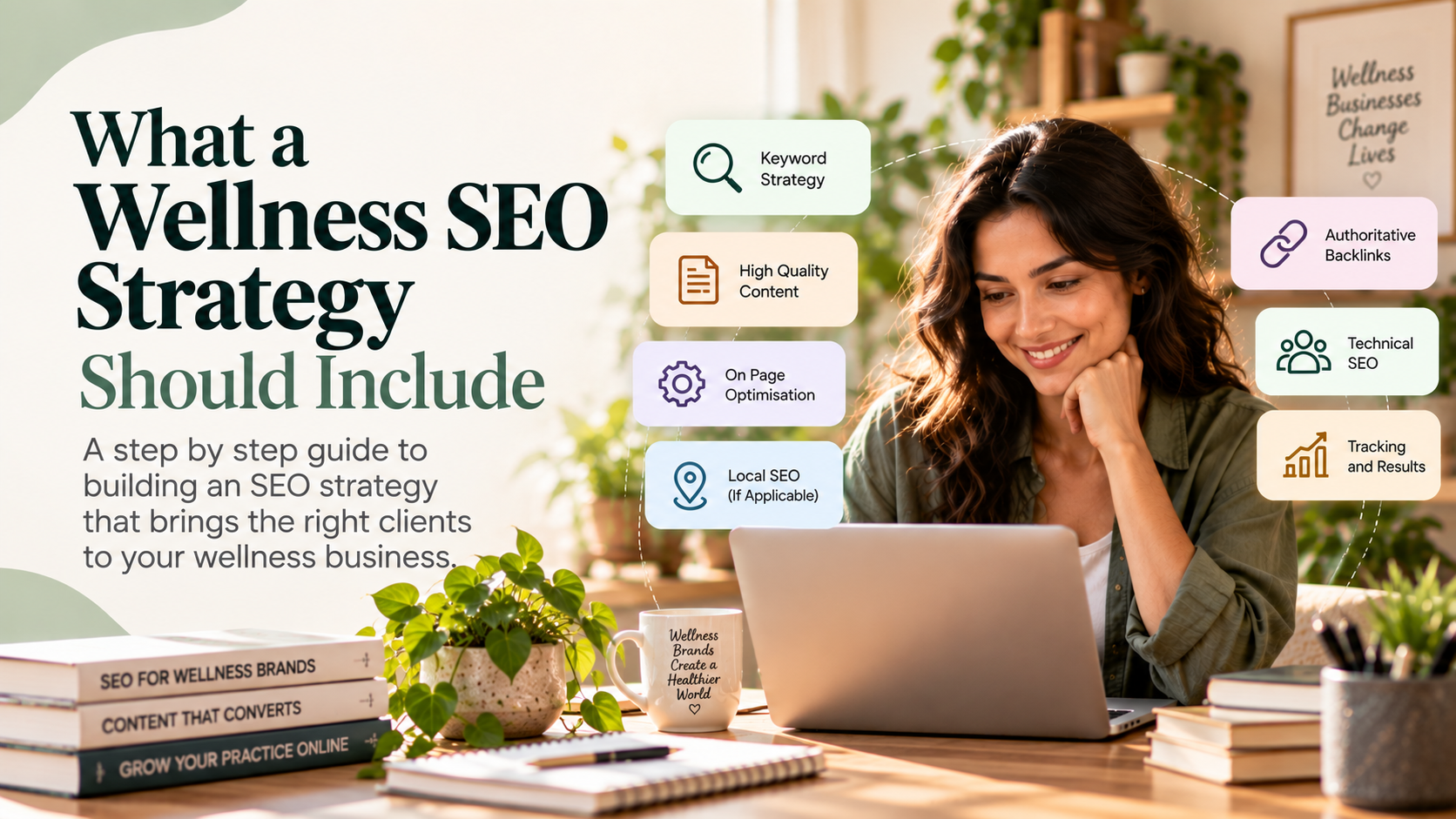
Introduction: SEO Is A System, Not A Blog Calendar
A wellness SEO strategy should answer one practical question: how will the business become easier for the right people to find, understand and choose through search? If the strategy is simply publish four blogs a month, it is a content schedule, not a complete SEO system.
A serious strategy connects technical accessibility, search intent, commercial pages, useful content, local visibility where relevant, practitioner trust, internal linking, authority and measurement. The mix changes by business. A therapist in one city, a nutritionist serving multiple locations and a wellness brand selling products should not receive the same plan.
Google's SEO guidance supports the underlying principle: build content and site structures for people, make important pages accessible to search systems, and avoid creating content simply to manipulate rankings.
1. Start With Business Strategy
Before keyword research, define the commercial reality. What does the business actually sell? Who is the best-fit client? Which services have the strongest economics? Which markets are genuinely served? What action should a qualified visitor take?
This prevents a common SEO mistake: targeting a keyword because it has search volume even though the business is not the right answer for the person searching it.
Write down the primary audience, primary services, target markets, business model, main conversion action, existing digital assets and genuine differentiators. This becomes the filter for every later SEO decision.
- Primary audience and professional niche.
- Primary and secondary services.
- Target locations or countries.
- Local, online, hybrid, multi-location or ecommerce model.
- Main conversion action.
- Website, Search Console, analytics, profile, reviews and content assets.
- Proof of expertise that can be represented accurately.
2. Build A Search-Intent Map
The next step is to group search demand by intent. Commercial searches ask about a service or provider. Local searches add geography. Informational searches explore a problem or question. Decision searches compare options, approaches, credentials or costs. Branded searches look for a known business or practitioner.
Each important intent should have a logical destination. A homepage should not be expected to rank for every service, location and question. A service page should own its service intent. A local page should explain a genuine market. An educational article should answer a useful question and guide the reader to the appropriate commercial page.
Annurya's USA wellness guide illustrates the distinction between broader market positioning and service-level search intent. The strategy should make those relationships obvious.
3. Establish Technical SEO Foundations
Technical SEO is the infrastructure that allows useful content to be discovered and understood. The exact work depends on the website, but the strategy should review crawlability, indexation, URL structure, canonicalization, page titles, headings, internal links, mobile usability, performance and other relevant technical issues.
Technical SEO should not become an endless checklist. Prioritise problems that affect discoverability, usability, search understanding or important commercial pages.
Structured data can help search systems interpret entities and page types, but it should accurately represent visible information. Technical changes should have a reason and should be documented.
- Important pages are crawlable and indexable.
- Duplicate URLs are controlled appropriately.
- Canonical URLs are correct.
- Titles and descriptions accurately describe pages.
- Headings provide a clear hierarchy.
- Important pages can be reached through internal links.
- Images have useful alternative text where appropriate.
- Mobile experience and performance are acceptable.
- Broken links and unnecessary redirects are addressed.
- Structured data matches visible content.
4. Make Commercial Pages The Core
If the goal is enquiries, commercial pages deserve disproportionate attention. A wellness practice can have excellent articles and still struggle if its service pages are thin, generic or difficult to trust.
A strong commercial page should make five things clear quickly: what the service is, who it is for, what the practitioner or business is qualified to do, where or how the service is delivered, and what the visitor should do next.
Supporting content should strengthen these pages rather than compete with them. If several URLs are targeting the same commercial intent, the strategy should decide whether to consolidate, differentiate or redirect rather than simply publish more.
- Clear service definition.
- Specific audience or problem fit.
- Relevant practitioner information.
- Location or online service model.
- Real trust signals.
- Useful FAQs where they help decision-making.
- Contextual internal links.
- Clear and appropriate calls to action.
5. Build Content Clusters Around Real Expertise
Supporting content should deepen subjects the business genuinely knows. Start with a commercial page and identify questions a potential client may ask before booking. The articles should cover distinct intents rather than creating multiple pages with almost identical targets.
A functional medicine practice, for example, may have legitimate expertise around certain conditions, services and decision questions. A therapist may build around modality, client questions, location and practitioner fit. The topics should come from the real business, not a generic keyword list.
The existing Functional Medicine SEO Guide already covers content clusters, local SEO, trust, technical foundations and AI visibility. The lesson is important: strengthen existing topic owners when they already exist rather than creating overlapping guides.
6. Use Internal Linking As Architecture
Internal links are not merely navigation. They help readers and search systems understand relationships between pages. A supporting guide can point to a commercial service page. A service page can point to useful educational resources. A market page can connect to a niche page.
Use descriptive anchor text naturally. Do not repeat the same exact phrase in every link. The objective is to make the relationship clear.
Review the site as a network. Important commercial pages should not be isolated at the end of the blog archive. They should receive contextual links from relevant guides, market pages and niche pages.
7. Local SEO When The Business Is Actually Local
If the practice depends on local clients, local SEO should be integrated into the strategy. The Google Business Profile should be accurate, the website should reflect the real service area and reviews should be genuine.
Google states that local results are mainly based on relevance, distance and prominence. That means local SEO is not about stuffing city names into pages. It is about creating an accurate, useful representation of the business.
Do not create dozens of near-identical location pages simply because every suburb has a keyword variation. A location page should exist because the business genuinely serves that market and has useful information to provide.
8. Build Trust And Authority
For wellness businesses, authority is not simply a backlink count. It includes the consistency and credibility of the business entity, practitioner information, authorship, qualifications where applicable, useful references and legitimate external recognition.
Never manufacture authority by inventing credentials, outcomes or affiliations. The agency should help the practitioner make real expertise easier to verify.
Authority work should also be relevant. A local wellness practice may benefit from professional associations, legitimate local references and useful community visibility. A larger brand may have opportunities for expert commentary, research-led content, partnerships or digital PR.
- Accurate practitioner names and credentials.
- Clear authorship and review information where appropriate.
- Consistent business information.
- Evidence-backed claims where evidence is relevant.
- Genuine reviews and reputation signals.
- Relevant external mentions.
- Content that demonstrates actual expertise.
9. Add AI Visibility Carefully
AI search adds another reason to make the business entity clear and verifiable. A prospective client may ask an AI assistant for practitioners, services, approaches or providers in a market. Clear entity information, consistent credentials, useful content, accessible pages and credible external references all support that broader discoverability.
AI visibility should not replace traditional SEO. It should sit on top of strong information architecture and trustworthy content. Claims about being recommended by AI should be measured carefully because responses can vary by model, prompt, location and time.
Annurya's AI Visibility and broader services architecture positions AI visibility as a layer that works with SEO and content rather than as a replacement for them.
10. Conversion Tracking Is Part Of SEO
A wellness SEO strategy is incomplete if it cannot tell whether search traffic is creating useful business actions. Set up appropriate events for the actions that matter to the business.
This changes the optimisation loop. If a page ranks but does not generate the right actions, the answer may be intent mismatch or conversion experience rather than more backlinks. If a page receives impressions but few clicks, title and description testing may help. If it receives qualified visits but few enquiries, the page and offer need investigation.
- Visibility audit requests.
- Contact form submissions.
- Booking or consultation clicks.
- Phone or messaging clicks where relevant.
- Qualified lead stages where reliable attribution exists.
11. A Practical 90-Day Strategy
Days 1 to 30 should establish the baseline and remove major blockers. That can include technical checks, Search Console analysis, conversion tracking, search-intent mapping and commercial page priorities.
Days 31 to 60 should strengthen the pages that matter most, improve internal links, address local signals and publish only the supporting content that fills real gaps.
Days 61 to 90 should use fresh data to decide what deserves expansion. If an existing page begins gaining impressions for an important commercial query, improving that page may be more valuable than creating another article.
- Days 1 to 30: diagnose, measure and fix.
- Days 31 to 60: strengthen commercial relevance.
- Days 61 to 90: expand what the data supports.
12. What Should Be In The Monthly Report?
A useful report should show what changed, why it changed and what the team will do next. It should not bury the business owner in hundreds of metrics.
Look for a connection between visibility and commercial action. A report should help answer whether the site is becoming more visible for relevant searches, whether important pages are improving and whether qualified visitors are taking the intended next step.
- Organic clicks and impressions.
- Priority query movement.
- Priority page movement.
- New search opportunities.
- Technical issues resolved.
- Content published or materially improved.
- Local visibility where relevant.
- AI visibility signals where being measured.
- Conversions and qualified enquiries where tracking is available.
- Next-month priorities.
13. What A Complete Strategy Should Not Include
- Guaranteed rankings.
- A fixed blog quota regardless of need.
- Hundreds of city pages with no unique value.
- Keyword stuffing.
- Fake reviews or manufactured credentials.
- Large quantities of low-quality backlinks.
- SEO activities disconnected from commercial pages.
- Reporting that ignores conversions.
- Content published without appropriate subject-matter review.
14. How To Know The Strategy Is Getting Better
Improvement can appear in stages. Early progress may be better indexation, more impressions or movement for lower-competition searches. Later progress may include stronger rankings for commercial queries, more qualified organic visits and more enquiries.
Do not judge the strategy from one week of rankings. Search systems recrawl pages over time, competitors change and search behaviour changes. Look for patterns across several weeks or months and connect them to work that was actually completed.
Good reporting should therefore explain both movement and learning. Sometimes the result is that a topic is not commercially valuable and should be deprioritised. That is useful information, not failure.
15. The Practical Bottom Line
A complete wellness SEO strategy has one purpose: make the right business easier to discover and easier to trust. It starts with business reality, maps search intent, fixes technical foundations, strengthens commercial pages, builds useful supporting content, develops local and authority signals where appropriate and measures whether visibility turns into meaningful action.
If an SEO plan cannot explain which page should rank, why that page deserves to rank, what work will improve it and how the business will measure the result, it is not yet a complete strategy.
How Annurya Builds This Layer
Annurya's Wellness SEO Services approach connects technical SEO, on-page content and trust with search intent. Its AI Visibility and GEO layer addresses discoverability in AI systems, while its Case Studies provide examples of documented work.
The purpose of this section is not to claim that one strategy fits every business. Review the service page, niche framework and case studies against the criteria in this guide and decide whether the approach fits your own situation.
Further Reading
Internal Annurya resources:
- Wellness SEO Services
- AI Visibility & GEO
- Case Studies
- Local SEO for Wellness Practitioners
- Functional Medicine SEO Guide