September 10, 2026 · By Annanya Adyasha
Roofing SEO: The Complete Guide to Search Visibility
Introduction
Roofing SEO helps a company become discoverable when property owners search for roofing services, problems and local providers. Because the search journey is often local and commercial, good SEO must connect service relevance with local signals, technical accessibility, proof and conversion.
1. Map roofing search intent
Group searches into service, problem, material and location themes. Service examples include roof repair, replacement and inspection. Problem searches can involve leaks or storm damage. Material searches can involve metal roofing or shingles. Location searches combine the service with a town or city.
2. Build a keyword-to-page map
Assign a primary intent and URL to each important search theme. Do not create one page for every variation. If roof repair and roof repairs near me represent the same underlying intent, one strong service page may be more useful than multiple thin pages.
3. Build strong service pages
A service page should explain what the service involves, when it may be needed, what customers can expect, evidence of relevant work, FAQs and the next step. Only create pages for services the business genuinely provides. The wider digital marketing system is covered in How to Market a Roofing Company.
4. Build local SEO foundations
Maintain accurate business details and Google Business Profile information, collect genuine reviews and develop relevant local references. Service-area pages can be useful when they reflect real coverage and provide meaningful local information.
5. Strengthen technical SEO
Check crawlability, indexation, canonicals, redirects, sitemap coverage, page speed, mobile usability, internal links, image sizes and accessibility. Remove broken or obsolete pages carefully and redirect relevant URLs rather than creating chains.
6. Create helpful roofing content
Answer real questions about repair versus replacement, inspections, roof lifespan, maintenance, storm damage and materials. Avoid pretending a general article can diagnose a property remotely or provide an exact quote.
7. Use project content as evidence
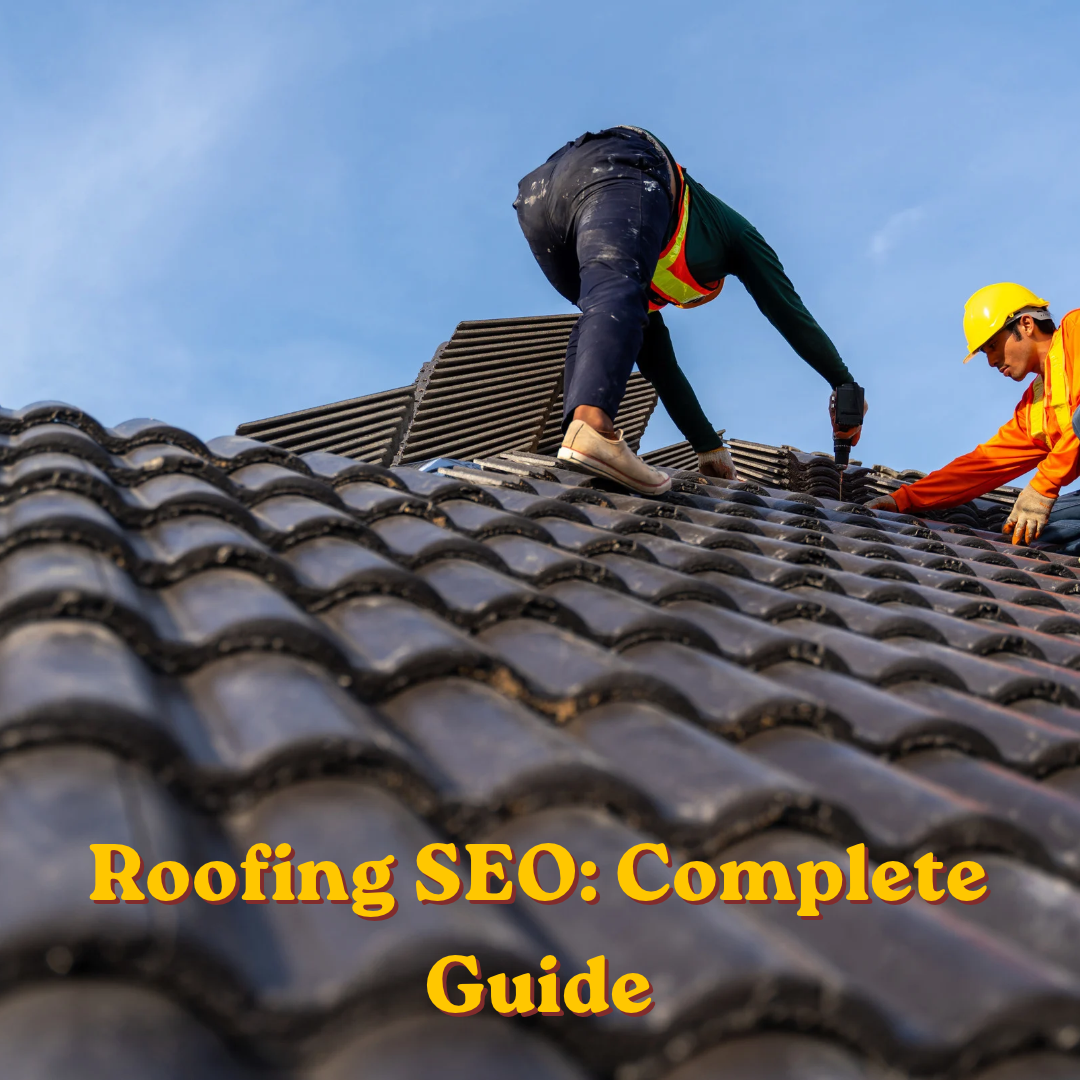
Original project pages can demonstrate capability while supporting search visibility. Include original photographs, meaningful descriptions and relevant location or service context. Do not present stock images as the company's work.
8. Build internal links
Roofing SEO guide should link to Digital Marketing for Roofing Companies, relevant service pages and supporting guides such as How to Get Roofing Leads Without Google Ads. Build the same network from service pages back to the cornerstone.
9. Earn authority ethically
Trade associations, local partnerships, supplier relationships, podcasts, community organisations, expert commentary and original research can produce legitimate mentions. Avoid buying links or using automated schemes. The companion acquisition guide covers the organic lead-generation system.
10. Optimise for conversion
SEO traffic has commercial value only when visitors can take the next step. Use clear phone and estimate actions, genuine proof, concise forms and mobile-friendly UX. See the companion Roofing Website Conversion Guide.
11. Connect SEO and social proof
Social media can distribute project content and reinforce recognition. It does not replace search, but it can make the company feel familiar when a prospect compares providers.
12. Consider AI visibility
Make the company, services, locations and expertise clear across the website and legitimate external sources. AI Visibility & Generative Engine Optimisation page explains the broader approach.
13. Measure the right SEO signals
Use Search Console for impressions, queries, clicks and landing pages. Track calls and forms separately. Look for non-branded growth to understand whether the site is reaching people who did not already know the company.
Roofing SEO Checklist
- Intent map;
- service architecture;
- local foundations;
- technical health;
- original project content;
- useful FAQs;
- genuine reviews;
- descriptive metadata;
- internal links;
- accurate structured data where appropriate;
- mobile UX;
- ethical authority building;
- conversion tracking.
FAQs
How long does roofing SEO take?
Timing varies with competition, site history, content quality and authority.
Should every city have a page?
No. A location page should serve a genuine audience and add useful information.
Do backlinks matter for roofing SEO?
Relevant editorial references can help authority, but buying links is not a sustainable strategy.
Is a Google Business Profile enough?
No. It is one part of a broader local visibility system.
Conclusion
Roofing SEO should be treated as a system rather than a keyword exercise. Build around genuine services and search intent, make local relevance clear, show real work, maintain technical quality and build authority through useful contributions.
Build a roofing keyword-to-page map
Start with service, problem, material and location themes. Assign a target page, search intent and funnel stage to each group. Mark whether the page is commercial, informational or navigational. This prevents a site from producing five pages that all answer the same question.
Roofing service pages versus blog articles
A service page exists to explain a service and support an enquiry. A guide exists to answer an informational question. A page about roof replacement is different from an article about how to decide whether a roof needs replacement. Link them together so the guide can educate and the service page can convert.
Local SEO quality control
Check business name, address and phone information for consistency where appropriate; maintain accurate business categories and service information; collect genuine reviews; add useful local references; and make service areas clear. Avoid creating fake offices or location signals.
Image SEO for roofing websites
Use original project images whenever possible. Compress large files, use descriptive filenames, add useful alt text, and avoid uploading huge images that slow mobile pages. An image should help the page rather than simply occupy a visual slot.
Schema and structured information
Use structured data only when it accurately represents the page and follows search-engine guidelines. Relevant business, organisation, service, article or breadcrumb markup may be appropriate depending on the page. Structured data is not a shortcut to rankings; accuracy matters.
How to build links naturally
Create resources people genuinely need: maintenance checklists, inspection questions, material explainers, local weather-preparation guides or original research. Then share them with relevant associations, publications and communities. A link should be the result of usefulness rather than the sole objective.
How to diagnose a page that is not ranking
Check indexation first, then intent alignment, content quality, internal links, technical issues and authority. Compare the page with the actual search results: are the ranking pages service pages, guides, local businesses or something else? Match the intent before adding more copy.
Build a content cluster over time
Start with the commercial cornerstone and core service pages. Add the most valuable guides next. Then create narrower articles only where they answer distinct questions. Periodically consolidate overlapping content instead of allowing the blog to become a collection of competing URLs.